One of the biggest early decisions when planning a home bar is whether to:
- buy a ready-made bar kit, or
- build a bar from scratch (DIY)
Both options can produce an excellent result — but they suit different budgets, skills, and expectations.
This guide explains:
- Which option is cheaper
- Which is easier for beginners
- Which gives the best long-term result
- How to avoid the most common mistakes
If you haven’t planned your measurements yet, start here first:
→ The Ultimate Guide to Home Bar Dimensions (UK)
Correct sizing affects both kits and DIY builds.
Disclosure: As an Amazon Associate I earn from qualifying purchases.
This helps support Home Bar Kit at no extra cost to you.
You can read our full affiliate disclosure here.
Quick Answer
- Cheapest overall: DIY (if you already own tools)
- Easiest for beginners: Bar kit
- Fastest setup: Bar kit
- Most customisable: DIY
- Best first home bar for most people: Simple bar kit
What Is a Home Bar Kit?
A bar kit is typically:
- flat-pack or modular
- pre-measured to standard bar height
- designed to fit an under-counter fridge
This removes most of the planning and carpentry difficulty.
Typical kit includes
- bar counter structure
- shelving or storage
- front panels
- fixings and instructions
Beginner-friendly kit examples
Pros and Cons of Bar Kits
Advantages
- Fast to assemble
- Predictable cost
- No complex carpentry
- Ideal for first-time builders
Disadvantages
- Limited custom sizing
- Less unique appearance
- Quality varies by brand
For most beginners, the simplicity outweighs the downsides.
What Does a DIY Home Bar Involve?
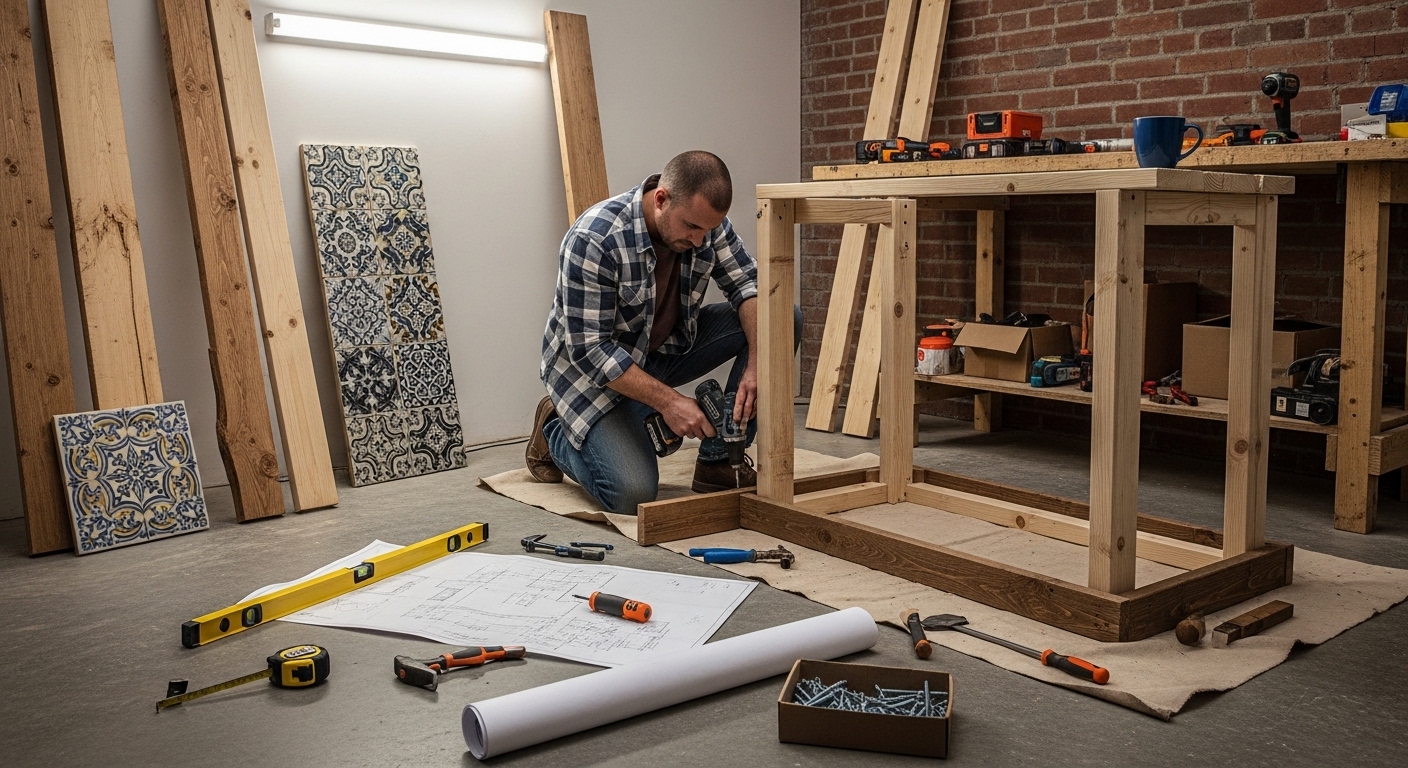
DIY means building from:
- timber framing
- plywood or MDF panels
- custom countertop
You control:
- exact size
- layout
- finish
- storage design
Pros and Cons of DIY Builds
Advantages
- Fully custom size
- Potentially cheaper materials
- More unique final look
- Easier to upgrade later
Disadvantages
- Requires tools and skills
- Takes longer
- Higher chance of mistakes
- Costs rise if errors occur
Essential Tools for DIY Builds
Common starter tools:
If you don’t already own these, DIY may not be cheaper.
Which Option Is Best for You?
Choose a Bar Kit if you:
- want a quick result
- have limited tools
- prefer simple assembly
- are building your first home bar
Choose DIY if you:
- enjoy woodworking
- want a custom size
- already own tools
- don’t mind a longer project
Most Successful First Bars Follow This Path
- Start with a simple kit
- Learn what works
- Upgrade or customise later
This avoids overcomplicating the first build.
Final Thoughts
Both bar kits and DIY builds can create a fantastic home bar.
But for most beginners in the UK:
A simple bar kit is the easiest, safest starting point.
You can always customise later — but starting simple makes finishing much more likely.

Rob is a passionate home bar and pub shed enthusiast with a passion for craft beer. With hands-on experience in designing and building his own home bar, Rob shares his knowledge, tips, and inspiration to help fellow enthusiasts create their own perfect space. Alongside the world of home bars and pub sheds, Rob also explores the diverse and exciting realm of craft beer, providing honest reviews to help you discover your next favorite brew. Join Rob on a journey of flavor, design, and craftsmanship right here on Home Bar Kit.